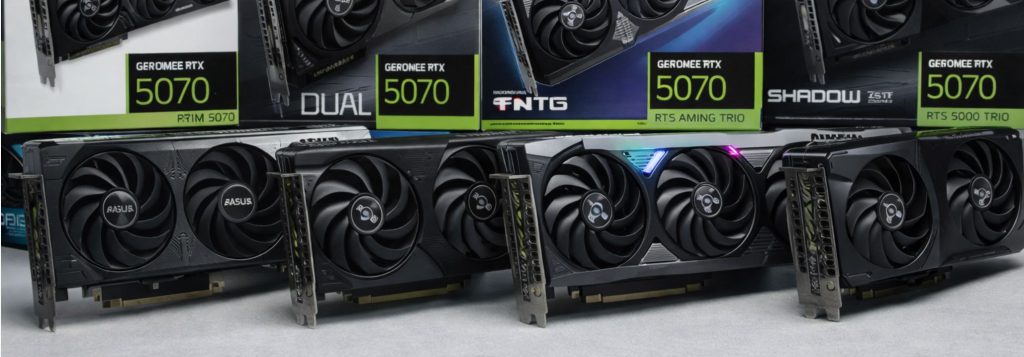
Shopping for an RTX 5070? While there is a wide range of versions available, they are for the most, the same GPU, yet very different cards. The “right” model depends on your case size, noise tolerance, thermal conditions, and whether you want a mild factory OC or a quieter, cooler build.
last Updated: 03/03/2026
This page is built for buyers ready to purchase: compare the popular RTX 5070 Amazon UK listings, avoid case-fit mistakes, and pick the best match for you fast.
Why RTX 5070 models differ (even with the same GPU)
- Cooling & noise: These cards come with a choice of 2 or 3 fans. 2 Fan versions offer more compact forms, with a sacrifice of been louder when under high load. Heatsink mass varies too, with larger designs offering better thermal management, at cost of weight and size. Some designs come with custom fan curves, meaning the rate at which the fan spins faster is modified to improve cooling or offer quieter experiences.
- Factory OC vs standard: Some card manufacturers offer factor installed over-clocking setups, which can offer small FPS uplift, but sometimes higher noise and power usage.
- Size & case fit: slot thickness + length matter to ensure your card will physically fit within your case. Most gaming cases will offer enough physically size, but length and thickness of card and available space should be considered. sufficient space should be left to allow ample airflow for cooling.
- Power delivery: different VRM designs can consume considerably more power, ensure you know the power limits of your current setups, ensure you have the compatible connectors.
- Build + warranty support: varies by brand and model tier.
Quick comparison (Amazon UK shortlist)
Note: Specs like exact length, slot thickness, and power connectors can vary by revision. Always confirm on the Amazon listing before checkout.
| Model | Cooling | Size / Fit | Noise Expectation | Power Notes | Best For |
|---|---|---|---|---|---|
| ASUS Prime RTX 5070 12GB OC | Triple fan, larger heatsink | Typically longer; check clearance | Lower under load (usually) | OC profile; verify PSU headroom | Gaming + sustained loads, quieter builds |
| MSI RTX 5070 Ventus 2X OC | Dual fan | Shorter than many triple-fans | Mid (fan speed rises sooner) | Good mainstream pick; confirm connectors | Budget-conscious buyers, mid-tower builds |
| ASUS Dual RTX 5070 OC | Dual fan, compact design | SFF-friendly (often shorter) | Mid (depends on airflow) | Great if PSU is decent quality | Small cases, clean builds |
| MSI RTX 5070 Gaming Trio OC | Triple fan, premium cooler | Larger card; needs space | Lower (often best acoustics) | OC headroom; confirm recommended PSU | Best thermals/noise, heavy gaming/creator loads |
| MSI RTX 5070 Shadow 2X OC | Dual fan | Usually easier fit than triple-fan | Mid-high (more fan work) | OC tuned; verify PSU quality | Value pick when priced right |
Model-by-model breakdown (the cards in our Amazon UK set)
1) ASUS Prime GeForce RTX 5070 12GB OC Edition
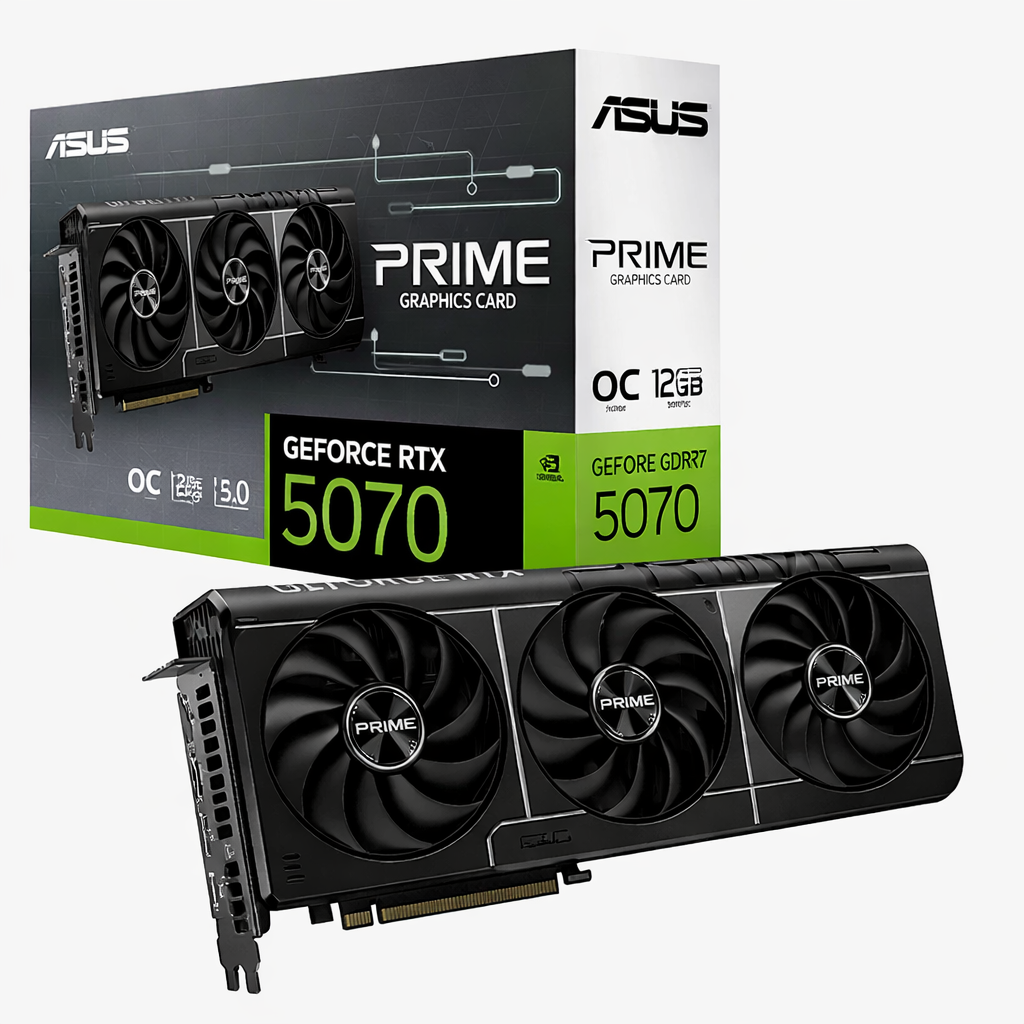
Buyer fit: if you want a “set it and forget it” cooler and generally calmer acoustics, this style of larger multi-fan card is usually the safer pick.
- Cooling: triple-fan layout typically holds boost clocks more consistently.
- OC behaviour: factory OC is usually a small uplift, not a new tier of performance.
- Case compatibility: verify GPU length and slot thickness.
- Use cases: gaming at high settings, long sessions, creator workloads that run hot.
2) MSI GeForce RTX 5070 12G Ventus 2X OC
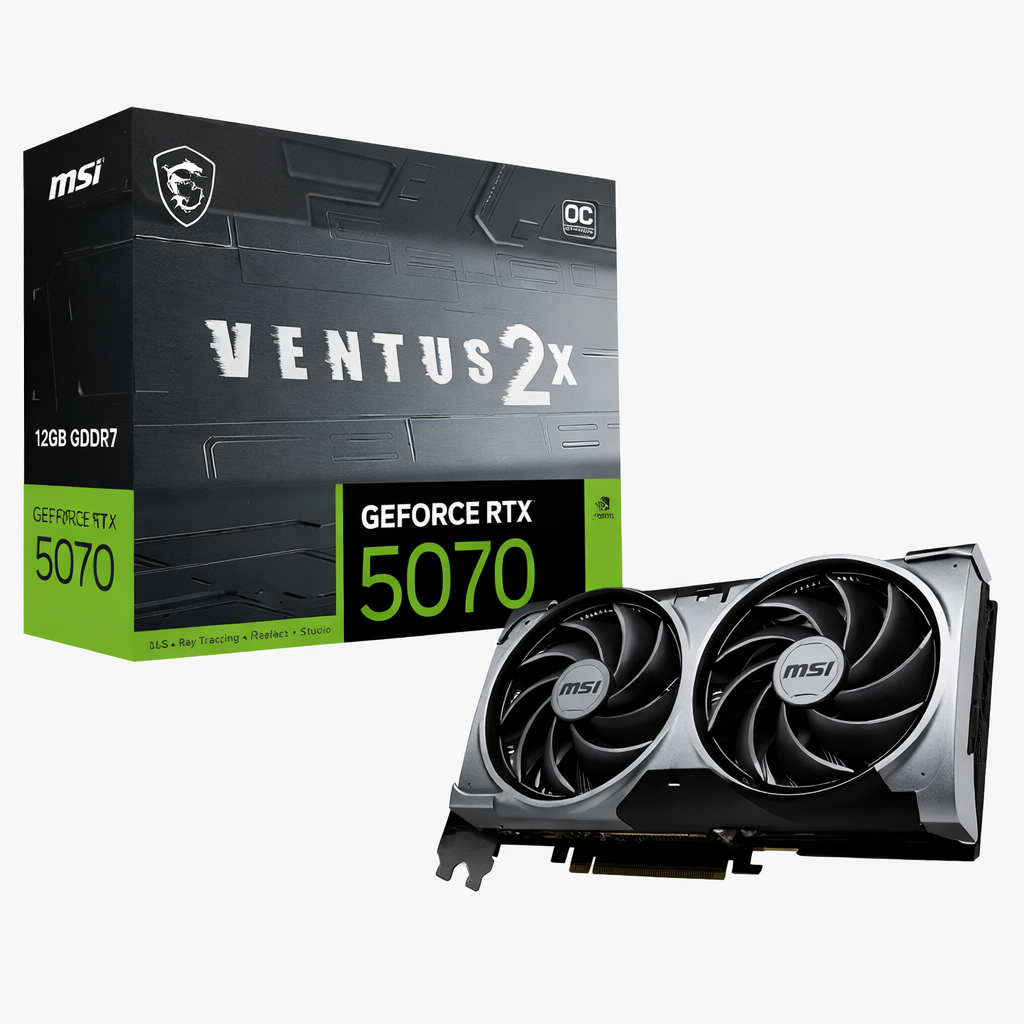
Buyer fit: often the most sensible “price-to-performance” route when the premium triple-fan cards are inflated.
- Cooling: dual-fan designs can run warmer, so airflow matters more.
- Noise: can ramp earlier under load compared to bigger heatsinks.
- Case compatibility: usually easier than the big 3-fan options.
- Use cases: mainstream gaming builds, buyers who care more about price than silence.
3) ASUS Dual RTX 5070 OC (Compact / SFF-ready style)
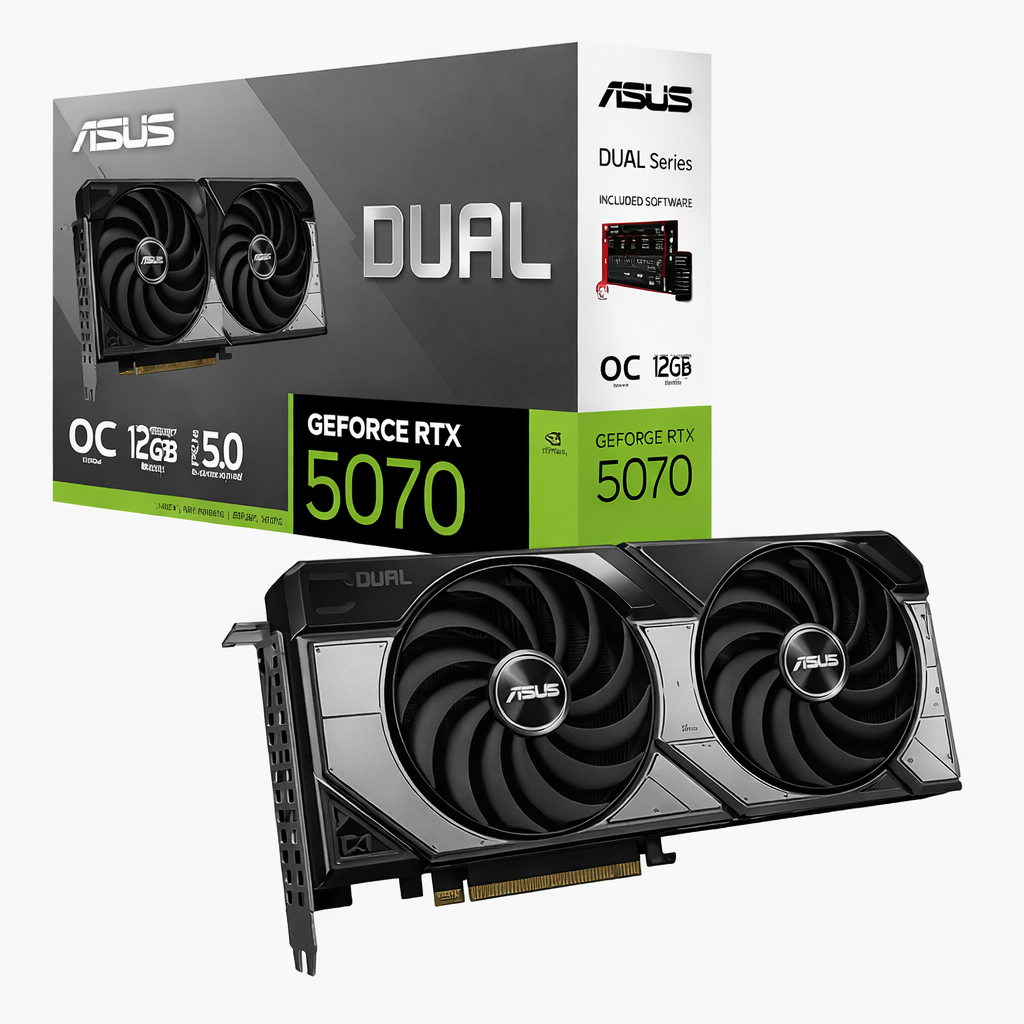
Buyer fit: the pick when your case is the boss. Great for smaller builds where triple-fan cards become a clearance nightmare.
- Cooling: compact cooler, so it depends heavily on case airflow.
- Noise: expect moderate noise under sustained load (varies by fan curve).
- Case compatibility: typically one of the easiest fits.
- Use cases: SFF gaming rigs, tidy builds, “fits-first” buyers.
4) MSI GeForce RTX 5070 Gaming Trio OC
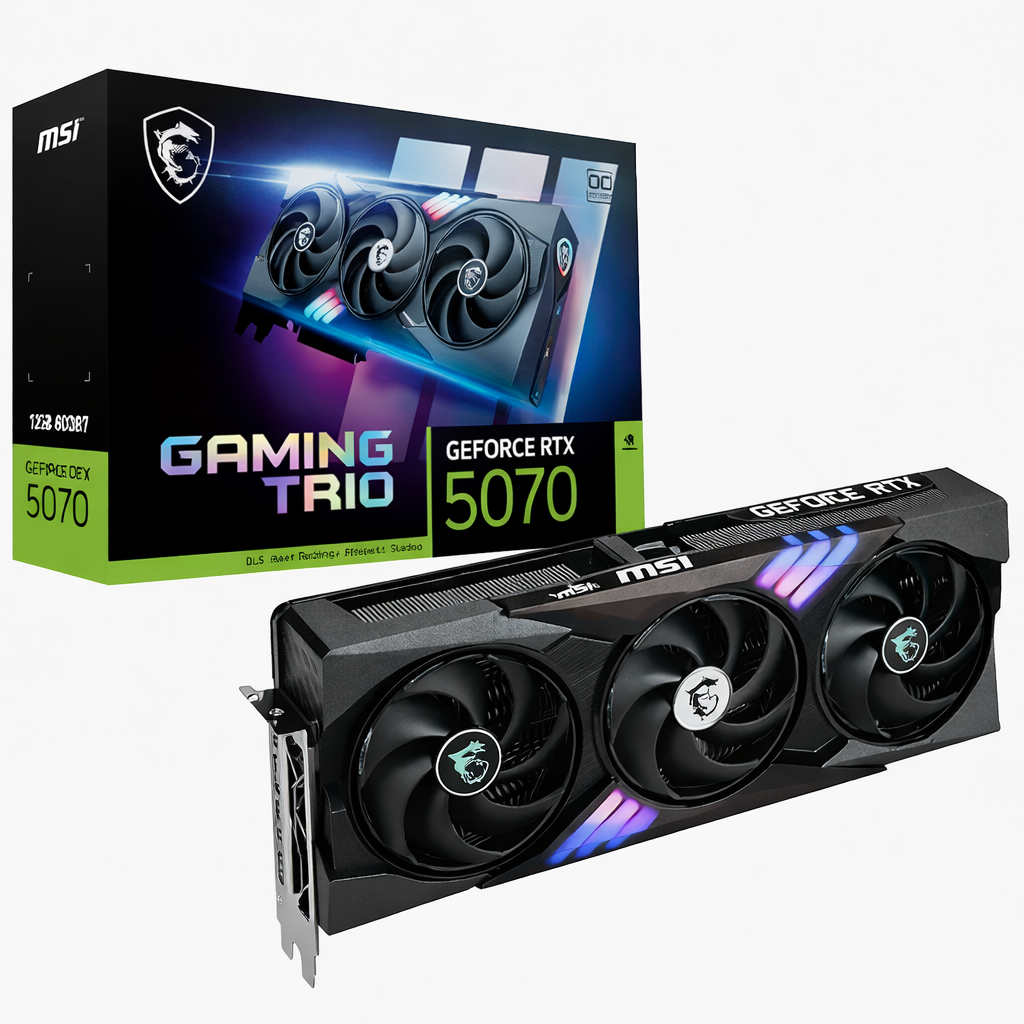
Buyer fit: if you hate noisy GPUs and you do long sessions (or creator workloads), this is typically where the best cooler lives. Price is the trade.
- Cooling: heavier triple-fan, usually best sustained thermals.
- Noise: often lowest in practice when tuned well.
- Case compatibility: confirm clearance (length + thickness).
- Use cases: high-FPS gaming, streaming, rendering, AI workloads that run longer.
5) MSI GeForce RTX 5070 Shadow 2X OC
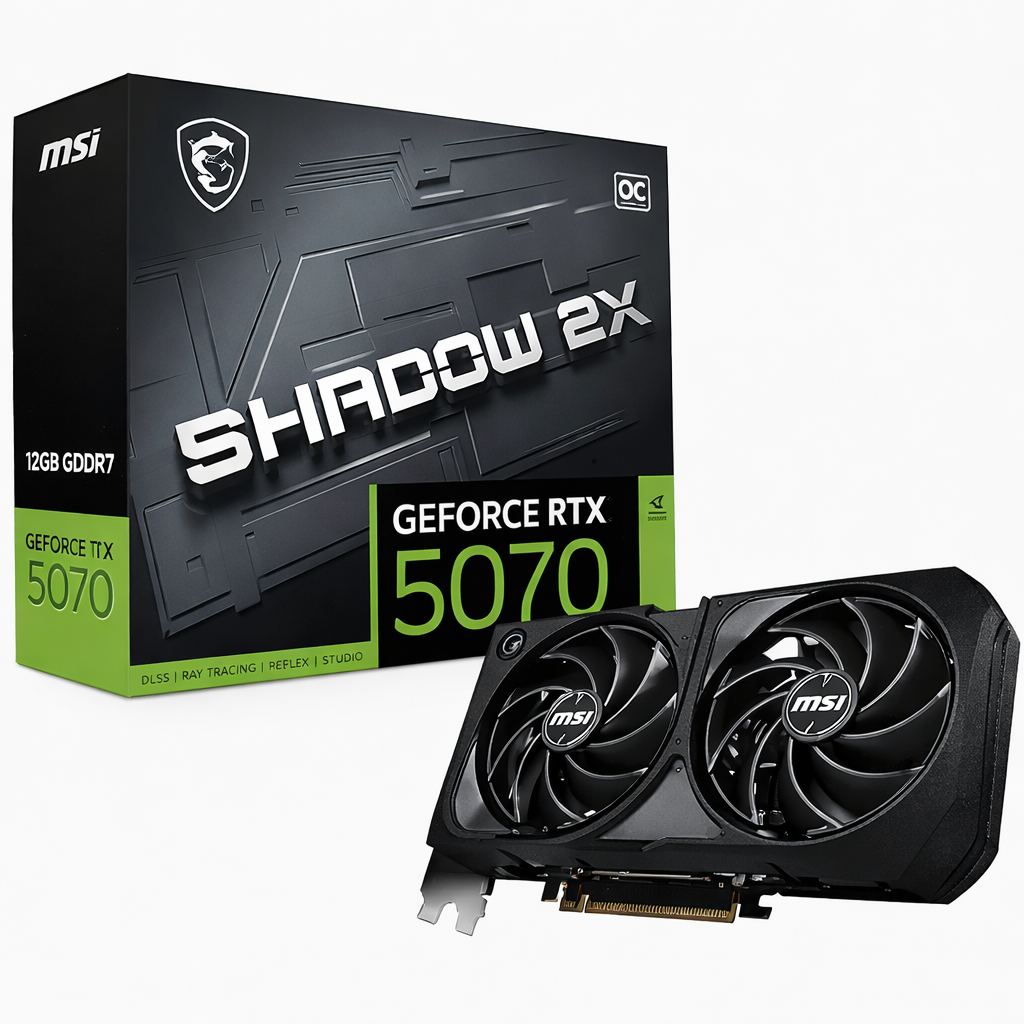
Buyer fit: a “buy it when it’s priced right” card. If it undercuts the market, it can be the clean value move.
- Cooling: dual-fan; check reviews for temps in your case style.
- Noise: can be higher in hot cases; better in airflow-focused builds.
- Case compatibility: generally easier than 3-fan cards.
- Use cases: value builds, buyers who want RTX 5070 performance without premium-tier pricing.
Best picks (fast decisions)
Best for gaming (thermals + noise)
MSI Gaming Trio OC (when priced within reach). If it’s massively inflated, ASUS Prime OC is often the next safest “cool + quieter” pick.
Best for small cases (SFF / clearance risk)
ASUS Dual OC. Pick this when your case clearance is tight and you want fewer surprises at install time.
Best budget option (buy only at the right price)
MSI Ventus 2X OC or MSI Shadow 2X OC. Choose whichever is meaningfully cheaper on the day, assuming it fits your case and your PSU is solid.
Final comparison: which RTX 5070 should you buy?
| If you want… | Buy this | Why | Avoid this |
|---|---|---|---|
| Lowest noise + best sustained temps | MSI Gaming Trio OC | Bigger cooler usually wins long sessions | Dual-fan cards in hot cases |
| Safer “quiet-ish” without extreme pricing | ASUS Prime OC | Typically a strong middle ground | Overpaying for tiny OC uplifts |
| Guaranteed easier case fit | ASUS Dual OC | Compact bias, fewer clearance issues | Huge triple-fan cards if space is tight |
| Best value (when discounted) | Ventus 2X OC / Shadow 2X OC | Good buy when priced under the pack | Paying premium prices for “entry” coolers |
FAQ (buyer-only)
Do OC models matter?
Usually it’s a small uplift. The real win is often the cooler (noise/temps). If two cards are close in price, prefer the better cooler rather than chasing a tiny OC delta.
What PSU do I need for an RTX 5070 build?
Use the brand’s stated recommendation on the listing. If you’re running a higher-end CPU, lots of drives, or you want quiet headroom, don’t cut the PSU close.
Which is best for AI / rendering?
For longer sustained loads, pick the card with the best cooler (often a premium triple-fan). That keeps clocks steadier and avoids aggressive fan ramp.
Affiliate disclosure: As an Amazon Associate, we earn from qualifying purchases. Links are tagged and may earn us a commission at no extra cost to you.